
By: Rebecca Witherspoon, April 20, 2025
In a time when we are told that “democracy dies in darkness,” it’s fair to ask: why are so many voices being silenced? Why are average Americans being deplatformed, prosecuted, and shamed for saying things that just a decade ago wouldn’t have raised an eyebrow?
And why does “free speech” seem to only apply to one side?
This is not just a cultural shift. It’s a coordinated effort—legal, political, and institutional—to control narratives, eliminate dissent, and silence opposition. Let’s break down how this is happening, who’s behind it, and why it should concern everyone, regardless of political affiliation.
We’ve gone from “I disagree with what you say, but I’ll defend your right to say it” to “If you say that, you’re a danger to society.”
Terms like “hate speech,” “disinformation,” “extremism,” and “harmful content” are being redefined so broadly that they can apply to virtually anything outside the mainstream narrative. A few notable examples:
- Oppose puberty blockers for children? That’s transphobic.
- Want voter ID? That’s racist.
- Think men shouldn’t compete in women’s sports? Bigot.
- Question election integrity? Domestic terrorist.
These labels are not meant to spark debate—they’re meant to end it, by shaming or banning you from participating.
In the United States, the First Amendment guarantees our right to free speech. It’s one of the foundational liberties that defines our democracy. It’s the reason you can post on social media, speak at a school board meeting, write a blog, or hold up a protest sign—even when others don’t like what you’re saying. But in recent years, this sacred right has come under increasing attack—not through overt bans, but through more insidious methods: government partnerships with private companies, the use of vague terms like “disinformation,” defamatory name-calling to silence dissenters, and inconsistent application of justice based on political ideology. When the government tries to silence dissent, even by working through third parties, it’s still censorship—and it’s still unconstitutional.
So let’s break down what the First Amendment protects, key court cases you should know about, and the growing dangers we’re facing today. I will do my best to explore how government overreach, biased legal systems, and politicized narratives are being used to silence dissent, muzzle truth, and redefine what “free speech” really means in America.
The First Amendment reads:
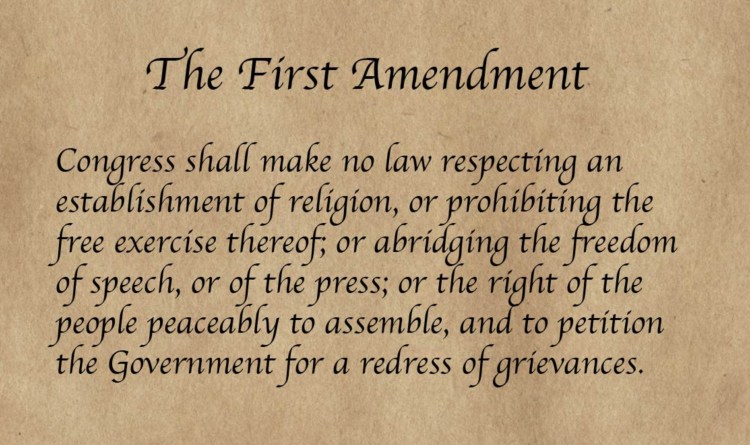
In plain English, that means the government can’t stop you from speaking your mind—especially when it comes to politics, religion, and public issues. This right is one of the cornerstones of a free society. It protects peaceful protestors, political critics, whistleblowers, journalists, and everyday Americans.
But, some speech is not protected—like inciting violence, making threats, or knowingly spreading false and harmful information (aka defamation). Courts in the United States have consistently ruled that the government should err on the side of allowing speech rather than punishing it.
Historically, the U.S. Supreme Court (SCOTUS) has served as the final guardrail. SCOTUS has upheld this right even when the speech in question has been unpopular and controversial. Some examples of landmark decisions include:
- Brandenburg v. Ohio (1969): Where the Court ruled that even radical or offensive speech is protected unless it directly encourages imminent unlawful action. This case raised the bar for when the government can restrict speech. (Read more about this case here: https://supreme.justia.com/cases/federal/us/395/444/#annotation)
- Tinker v. Des Moines (1969): Students wearing black armbands to protest the Vietnam War were protected by the First Amendment. The Court declared that students don’t lose their rights “at the schoolhouse gate.” (Read more about this case here: https://supreme.justia.com/cases/federal/us/393/503/)
- Texas v. Johnson (1989): Burning the American flag as protest was ruled protected speech, even though it offended many. (Read more about this case here: https://supreme.justia.com/cases/federal/us/491/397/#annotation)
- Masterpiece Cakeshop v. Colorado (2018): A Christian baker declined to make a custom cake for a same-sex wedding. The Court ruled that Colorado violated his rights by showing hostility toward his religious beliefs. (Read more about this case here: https://supreme.justia.com/cases/federal/us/584/16-111/#annotation)
- 303 Creative LLC v. Elenis (2023): A Christian web designer was protected from being forced to create websites for same-sex weddings, reinforcing that people cannot be compelled by the government to express messages they disagree with. (Read more about this case here: https://supreme.justia.com/cases/federal/us/600/21-476/#annotation)
These cases cemented a legal tradition that values expression, protest, and even offense, so long as it does not directly incite imminent violence or cause tangible harm.
In the digital age, one of the biggest threats to free speech doesn’t come from laws, it comes from collusion between the government and private platforms. In recent years, federal agencies developed covert partnerships with private companies, especially social media platforms, to flag or suppress speech. The government outsourced censorship to non-governmental entities, effectively bypassing constitutional protections. During the COVID-19 pandemic and the 2020 election cycle, federal officials frequently contacted social media companies like Facebook, Twitter, and YouTube to flag posts that contradicted official narratives—even when the posts were truthful or simply expressed alternative views.
In some cases, the government requested takedowns or pressured platforms to downgrade visibility for certain topics like vaccine concerns, lab-leak theories, or election security. Often, the information being targeted wasn’t false—it just didn’t fit the preferred message.
This came to a head in the case of Missouri v. Biden (2023), where plaintiffs accused the federal government of violating the First Amendment by coercing platforms into suppressing lawful speech. Evidence showed that federal agencies such as the FBI, CDC, and White House officials coordinated with tech giants to suppress narratives deemed “dangerous”—even when those narratives were factual or later proven correct. This included COVID-19 origin debates, vaccine side effects, election integrity concerns, and the Hunter Biden laptop story.” A federal judge issued an injunction, calling the government’s conduct “the most massive attack against free speech in United States history.” (Read more about this case here: https://law.justia.com/cases/federal/appellate-courts/ca5/23-30445/23-30445-2023-09-08.html)
More recently, Murthy v. Missouri (2024) was decided by SCOTUS on June 26, 2024. Plaintiffs, including doctors and state attorneys general, argued that the government cannot pressure platforms into removing dissenting opinions, especially those backed by science or reasoned argument. Ultimately, SCOTUS ruled that the plaintiffs could not demonstrate they were directly harmed by the federal government’s interactions with social media companies. That means even if they disagreed with what the government allegedly did, they didn’t prove it personally affected them in a concrete way that the court could fix — so the Court said they lacked standing. It’s like trying to sue someone over something that might affect people in general, but not you personally in a provable way. Without standing, the court can’t (and won’t) weigh in on the issue. As a result of this particular case, the question remains open until someone can prove they were personally affected by the government’s actions. (Read more about this case here: https://supreme.justia.com/cases/federal/us/603/23-411/#annotation)
Another recent controversy involved reports that government agencies and intelligence officials worked with mainstream media outlets to discredit the Hunter Biden laptop story before the 2020 election—even though it turned out to be real. Dozens of former intelligence officials signed a public letter dismissing the story as “Russian disinformation,” and major news outlets suppressed it. Social media companies followed suit, limiting or removing posts on the topic.
The result? Voters were kept from seeing verified information in a deliberate effort to influence public opinion. Whether it was the government directly or through pressure on platforms and media, it had the same chilling effect: silencing voices and controlling the narrative.
This type of censorship is unconstitutional. The government cannot do indirectly—through private partners—what it is forbidden from doing directly.
But it’s not just Big Tech or social pressure—the legal system itself is being weaponized.
- Donald Trump: Over 90 charges across four jurisdictions—all launched as he announced re-election
- Parents at school board meetings: Labeled potential “domestic terrorists” by the DOJ
- Pro-life activists: Facing federal charges for praying outside abortion clinics
- Journalists and whistleblowers: Raided, sued, or jailed for uncovering uncomfortable truths
This isn’t justice—it’s lawfare: using the legal system to drain, discredit, and destroy political opponents.
Legacy media used to be the fourth estate. Now, it’s the enforcement arm of the establishment narrative. Instead of holding power to account, they:
- Label dissenters as conspiracy theorists
- Spread government-approved talking points
- Collude to spike stories (as with Hunter Biden’s laptop)
- Cheer on censorship if it targets the “right” people
And independent outlets that try to break through? They are often throttled, demonetized, or labeled “fake news.”
The term “disinformation” has become a political tool. In many instances, it is not about rooting out lies—it’s about silencing those who present inconvenient truths.
Real-World Examples:
- Hunter Biden Laptop Story – Labeled disinformation weeks before the 2020 election. Now verified by outlets like The New York Times.
- COVID Lab Leak Theory – Initially dismissed as conspiracy; now a credible theory accepted by many scientists and U.S. agencies.
- Vaccine Injury Discussions – Suppressed, despite credible reports in VAERS and by medical professionals.
- School Closure Impacts – Experts warning about learning loss were censored as fearmongers. Warnings proven accurate.
- Border Crisis – Reports about surges at the southern border labeled disinformation until undeniable.
- 2020 Election Irregularities – Any concern was branded conspiratorial, even when grounded in data.
- Mask Effectiveness Debates – Conflicting evidence censored in favor of politically convenient narratives.
- Ukraine Aid Concerns – Questioning billions in foreign aid labeled anti-American or pro-Russian.
- January 6 Transparency – Efforts to release full footage have been blocked or ridiculed.
- Parental Rights in Schools – Parents labeled “domestic terrorists” for challenging school boards.
The problem isn’t just the use of “disinformation” as a silencer—it’s also the rise of defamatory name-calling. Voices questioning mainstream narratives are called Nazis, bigots, racists, and worse. These attacks don’t come just from fringe activists—they’re echoed by mainstream media outlets and elected officials.
This kind of rhetoric has bled into everyday life. Families have been divided, friendships severed, and neighbors turned against one another. Ordinary Americans have been “canceled” at work, in school, or on social media—not for hateful speech, but for expressing views that stray from the dominant political orthodoxy.
Censorship today often hides behind rules and regulations. Bureaucratic agencies use vague guidance, economic penalties, or licensing threats to suppress speech without ever appearing to censor.
A prime example was the Disinformation Governance Board that was proposed by the Biden Administration’s Department of Homeland Security. Though quickly paused after backlash, the mere idea revealed how normalized the concept of government-run speech control has become.
How to Spot Bureaucratic Censorship:
- Guidance that pressures tech platforms to censor.
- Regulations that penalize politically incorrect speech.
- Licensing and permit processes used to suppress dissent.
The First Amendment protects speech, expression, and peaceful assembly. But that protection ends when actions interfere with public safety, violate others’ rights, or become criminal behavior.
1. Blocking Roads or Emergency Routes
Protected: Marching on sidewalks, holding signs, or chanting on public property with a permit.
Not Protected: Blocking major roads, freeways, or emergency vehicle access routes.
Example:
- BLM Protests (2020): In several cities, protesters blocked freeways and bridges. While the message was protected, the act of obstructing traffic led to arrests and was not constitutionally protected—especially when ambulances were diverted or delayed.
- Legal Outcome: Protesters in Minneapolis and Los Angeles were charged with unlawful assembly and obstruction of public ways.
2. Violent or Threatening Behavior
Protected: Harsh criticism, unpopular opinions, or chants at rallies.
Not Protected: Violence, inciting imminent lawless action, or credible threats.
Example:
- January 6 Capitol Riot (2021): Peaceful protest outside the Capitol was protected. But storming the building, breaking windows, and threatening officials crossed into criminal trespass, vandalism, and violence.
- Legal Outcome: Hundreds arrested and charged; courts distinguished between peaceful protestors and violent rioters.
3. Occupation of Buildings or Destruction of Property
Protected: Protesting near government buildings or campuses.
Not Protected: Occupying buildings, vandalism, or disrupting official functions.
Examples:
- CHAZ/CHOP Zone in Seattle (2020): Protesters took over several city blocks, including a police precinct. The area became lawless, with multiple shootings and blocked emergency response. Ultimately, the city cleared the zone after many weeks due to public safety threats.
- College Sit-ins (Multiple Years): Peaceful sit-ins in designated protest areas are typically protected. But entering private buildings, refusing to leave, and disrupting classes or exams crosses legal lines.
4. College Campus Examples: Legal vs. Illegal Activity
Protected Speech:
- Harvard, UC Berkeley, University of Chicago: Peaceful rallies, teach-ins, and protests related to racial justice, tuition hikes, and war in Gaza—conducted in open areas with permits and without disrupting operations.
Speech Crossing the Line:
- Columbia University (2024): Protests turned into building takeovers, tent encampments that defied university orders, and chants promoting violence.
- Line Crossed: When protesters refused to disperse, harassed Jewish students, or disrupted campus operations, their actions became violations of university policies and local law.
- UCLA (2024): Clashes between opposing protest groups resulted in violence, leading to multiple injuries.
- Protected Expression Ended: At the point where safety was threatened and assaults occurred.
5. Incitement to Violence or Hate Crimes
Protected: Criticism of government, religion, institutions—even if offensive.
Not Protected: Speech that incites immediate violence or targets individuals for harassment or harm.
Example:
- Charlottesville “Unite the Right” Rally (2017): The rally permit was legal. But violent clashes and the vehicular homicide by a white supremacist were clearly criminal.
- Legal Result: Organizer sued; driver convicted of first-degree murder.
How Courts Decide
The Supreme Court uses clear tests to determine if speech crosses the line:
- Brandenburg v. Ohio (1969): Speech is not protected if it incites imminent lawless action and is likely to produce such action.
- Tinker v. Des Moines (1969): Expression in schools is protected unless it substantially disrupts the educational process.
- Madsen v. Women’s Health Center (1994): Protesters may not block access to healthcare clinics even if their speech is otherwise lawful
Selective Justice: A Dangerous Double Standard
Perhaps the greatest threat to free speech is the unequal enforcement of the law.
Compare These Cases:
BLM / Antifa (2020):
- Portland riots: 1,000+ arrested, most charges dropped
- CHAZ: Armed occupation, few prosecutions
- White House siege: Dozens injured, little accountability
January 6 Protesters (2021):
- 1,200+ arrested, even non-violent participants
- Harsh sentencing, solitary confinement
- No one charged with insurrection—yet many labeled as such
- The only people killed on January 6 were unarmed protestors, including Ashli Babbitt, who was shot by a Capitol Police officer. The officer was never charged, despite breaking department protocol and firing on an unarmed woman who posed no immediate threat.
- Several police officers were also seen repeatedly beating unarmed individuals, including those already on the ground or trying to comply. None were prosecuted.
Notable Examples:
- Jacob Chansley (“QAnon Shaman”) – 41 months for non-violent entry
- Matthew Perna – Took his life after severe plea deal pressure
Over the course of several years, the double standard was clear. If your cause aligned with the political left, leniency was likely. If not, you needed to prepare for maximum punishment. This approach has shattered public trust in the justice system.
The Left’s War on Free Speech and the Power Grab Behind It
The far left of the Democrat Party and its allies in the mainstream media have embraced these tools of suppression not merely to stifle dissent—but to consolidate power. By redefining what is acceptable to say, who can say it, and on what platforms, they shape the national narrative in their favor.
They label political opponents as extremists, create public fear around dissenting ideas, and push for deplatforming under the guise of safety. These tactics are not just political—they are authoritarian.
The average American is feeling the pressure. Speaking openly at work, on social media, or even within families has become a risk. Citizens are self-censoring in fear of reputational or professional harm. This erosion of honest dialogue is dangerous. It fractures communities, hardens division, and undermines our ability to function as a free society.
A Country at the Brink — and the Road Back
Even if you agree with some of the censorship today, what happens when your opinion is next? The principles of free speech don’t exist to protect popular opinions—they exist to protect the unpopular ones.
History shows us: When governments, tech, and media align to decide what can and cannot be said, the outcome is never freedom.
What Can You Do?
- Speak up anyway – Silence enables tyranny
- Support independent media – They’re the last line of real journalism
- Vote with your dollar and your voice – Platforms and politicians notice
- Educate others – Share information, not just opinions
- Stay legally aware – Know your rights and how to protect them
When speech is suppressed, justice is inconsistent, and labels are weaponized, the nation suffers. We are standing at the edge of a very dangerous cliff. If these trends continue, the divide may become irreparable.
How We Reverse the Damage:
- Reform Laws Around Free Speech: Enact clear protections for speech online, including on major platforms that act as modern public squares.
- Demand Accountability: Advocate for Congressional oversight and independent journalism and hold public officials and media outlets responsible for spreading false narratives and smearing dissenters.
- Restore Neutrality in Justice: Strip politics out of prosecution. Demand equal treatment, regardless of ideology.
- Support True Journalism: Independent media that reports facts—not partisan talking points—is vital.
- Educate the Public: Teach real constitutional literacy in schools and communities.
- Encourage Civil Discourse: We must relearn how to disagree without dehumanizing. Speak up anyway – Silence enables tyranny.
- Support independent media – They’re the last line of real journalism.
- Vote with your dollar and your voice – Platforms and politicians notice.
- Stay legally aware – Know your rights and how to protect them.
- Demand transparency: Use FOIA requests to reveal the truth.
We don’t have to agree on everything. But we should agree on this: Free speech is non-negotiable. Once you lose the right to speak, you lose the ability to dissent, to debate, and eventually—to be free.
This is not just a political issue. It’s a moral and constitutional one.
The First Amendment doesn’t need to be rewritten—it needs to be respected. Every generation must defend it anew. This is our moment. We can either remain silent and slide further into totalitarianism, or we can stand and reclaim the heart of what it means to be American: the right to speak freely, boldly, and without fear.
If free speech only works one way—it doesn’t work at all.
Legal Disclaimer: This article is for informational purposes only and does not constitute legal advice. The information provided reflects current events and the author’s perspective as of the date of publication. Readers should consult a qualified attorney for advice regarding specific legal concerns or court cases.
 Musings By Rebecca
Really good post!!!
You thought it out well and effectively used real world examples and actual law to support your opinion.
Good job!
LikeLike
Thank you so much. Hopefully, I did this first deep dive justice and can do justice to the rest of the upcoming deep dives.
LikeLiked by 1 person