The Dark Side of Politics: The Hidden Cost of Smear Tactics and How They’re Poisoning Democracy

By: Rebecca Witherspoon, April 8, 2025

Politics has always been a bit contentious, but these days, it feels like the focus has shifted from policy debates to personal attacks. With social media amplifying everything, it’s easier than ever for false narratives and smear campaigns to take root. And, it seems that some far-left factions of the political spectrum have been using these tactics more and more.

And, no, I’m not suggesting every progressive or Democrat is guilty of this, but it’s becoming more common to see smear campaigns used to target opponents instead of engaging in healthy debates or offering better solutions. In fact, I experienced this firsthand after a recent vote of the village board on which I serve didn’t go the way a small group of far-left activists hoped. Thankfully, I did win my re-election bid despite the attempts to smear my reputation in the eyes of my local constituents. Disturbingly, the experience revealed a dark side to my community. I will forever be grateful to the many, many people in my community who reached out to me throughout the experience with kindness, prayers, and support—reinforcing to me exactly who I am working for every day as their local representative.

Instead of discussing the issues at hand or proposing alternative ideas, these activists resorted to personal attacks. They created multiple fake social media accounts to anonymously spread false and defamatory information primarily about me but even included some of the village staff—attacks that were not only untrue but also designed to damage our reputations. This wasn’t just isolated to one or two people—it was a coordinated effort by multiple people to undermine me and anyone else who disagreed with their views.

What’s worse is that some voices from the far-left even tried to justify this kind of treatment by arguing that public figures like me should simply “expect” to face personal attacks and defamatory behavior. They claimed that because we choose to enter the political arena, we somehow give up the right to defend ourselves against these kinds of attacks. This perspective is not just wrong—it’s dangerous.

Just because someone is in the public eye doesn’t mean they forfeit their basic rights to personal dignity and the ability to defend themselves. Public figures are still human beings, and we should be able to stand up against false claims without being labeled as “soft” or “weak” or “retaliatory.” Every person—whether they’re in politics or not—deserves the right to protect their reputation from lies and defamation. While it may be more difficult for a public figure to succeed in holding someone accountable, it’s not impossible.

It’s important to remember that we all have the same rights as anyone else. Our public roles don’t strip us of the fundamental freedoms we enjoy as citizens. These rights are enshrined in law, and no one should be above the ability to challenge defamation. Politics should never be an excuse for allowing harmful and unfounded attacks to go unchecked.

But, as anyone who’s faced these kinds of attacks knows, standing up for yourself isn’t always simple. In fact, it can often make things worse.

After being targeted, I initially chose to refrain from responding directly. I thought the best way to handle it would be to rise above the personal attacks and stay focused on the issues at hand—and I continue to believe in most cases that not responding to the attacks is the best course of action. However, what I quickly learned is that in some situations when you don’t immediately defend yourself, the smears tend to escalate in both intensity and nastiness. Silence is often seen as an invitation to double down. The longer you remain quiet, the more the attackers feel emboldened to spread even more damaging lies, and the louder their voices become.

Here’s where things get particularly tricky: when you do attempt to defend yourself, it often triggers a response much like the behavior of a narcissist. Narcissists thrive on pushing buttons, manipulating reactions, and playing psychological games. When they see that they’ve hit a nerve, they double down, believing they’ve found the right “buttons” to push to get a reaction.

The more you respond, the more the attackers feel validated. They perceive your defense as proof they’ve “won” or that they’re having an effect on you. Unfortunately, this dynamic only fuels the attack cycle—making it even harder to stop. It’s like throwing gasoline on a fire: every attempt to put it out only makes it spread.

So, how should someone in my position deal with these kinds of attacks? Here are a few suggestions:

  1. Stay Calm and Composed: While it’s natural to want to respond, staying calm and collected is key. Responding in a way that reflects dignity and respect for the truth will ultimately resonate more with the public than reacting emotionally.
  2. Focus on the Issues: It’s easy to get pulled into the drama, but the best response is to stay focused on the real issues. Talk about your values, your goals, and your vision. This shows voters that you’re committed to substance over spectacle.
  3. Speak Your Truth: If you do choose to address the attacks, be clear, factual, and concise. Present the truth without sinking to the level of personal attacks. This can help counter the narrative without escalating the situation further.
  4. Call Out Disinformation: It’s essential to correct false information as it arises. Whether it’s through a social media post, a press release, or a community meeting, make it clear that you won’t tolerate defamation and stand up for what’s right.
  5. Seek Legal Recourse If Necessary: In cases where the defamation is severe or harmful to your personal life, it may be worth seeking legal advice. While defamation cases can be challenging to pursue, there are legal avenues to stop false attacks and hold perpetrators accountable even for public figures.
  6. Find Support: Surround yourself with people who understand the challenges of public life and can offer emotional support. Whether it’s friends, family, or other community leaders, having a solid support system can help you navigate the stress that comes with personal attacks.
  7. Engage with the Public Directly: One way to combat these smears is to engage directly with the community. Hosting town halls, participating in public forums, or using your platform to speak directly to constituents can help shift the focus back to the real issues that matter to people.

Sadly, these types of incidents aren’t isolated to just my village.

In Alabama’s 2017 Senate race, progressive operatives were caught running fake Facebook pages that pretended to be conservative voters, pushing divisive issues to try and manipulate the vote. In Prairie Village, Kansas, progressive leaders coordinated online attacks against residents who opposed rezoning plans. And in Greensboro, North Carolina, a fellow city council member was publicly attacked with false accusations about her leadership during the pandemic—all to hurt her re-election efforts.

These smear campaigns are more than just frustrating—they’re harmful to our democracy.

When people see how destructive these attacks can be, it makes it harder for good, qualified individuals to even consider running for office. Why would anyone want to put their family, reputation, and peace of mind on the line when there’s a real risk of being publicly attacked and misrepresented?

Instead of focusing on real issues—like improving schools, healthcare, and community development—this kind of political strategy shifts the conversation to personal destruction. And that only makes it harder to find the right solutions to the problems that matter.

A Call to Action

It’s up to us as a society to reject these toxic tactics and bring the focus back to real solutions. Smear campaigns, no matter which political side they come from, only serve to poison the political environment, drive good people out of public service, and distract from the issues that truly matter. We cannot allow this behavior to go unchallenged.

If we want to restore integrity to our political system, we need to support leaders who are willing to stand up for what’s right—without resorting to personal attacks. We need to demand transparency, accountability, and a renewed commitment to civil discourse.

It’s time to push back against the culture of personal destruction and create a political environment where ideas, not insults, shape the conversation. But it starts with each of us—by refusing to engage in smear tactics, holding ourselves and others accountable, and advocating for a more respectful, solution-driven approach to politics.

Only then can we begin to rebuild trust, restore integrity, and put the focus back where it belongs—on the real issues that affect our lives and our communities.

Bridging the Divide: Understanding Liberals, Conservatives, and the American Middle

By: Rebecca Witherspoon

The ideological divide between the left and the right in American society often feels as wide as the Grand Canyon. At its core, the difference lies in how each side views the role of government, authority, and individual liberty. Understanding the motivations behind both perspectives is essential if we ever hope to find a path forward together as a nation.

Those on the left (liberals) tend to see government as a force for good—a necessary tool for solving social problems, advancing equality, and protecting the vulnerable. This belief often stems from an overconfidence and belief in the infallibility of institutions and experts. From their perspective, government intervention is not just helpful, but often necessary to correct what they view as historical injustices, regulate powerful interests, and provide services they feel the private sector neglects. For many liberals, trusting government and the experts means trusting the people and systems they believe have the knowledge and experience to lead effectively. Some liberals (not all) have a tendency to dismiss the views and values of those with whom they disagree, and in the more extreme cases to support the suppression of personal freedoms so long as that suppression advances what they believe to be noble goals.

On the other hand, those on the right (conservatives) tend to view government with a healthy dose of skepticism. They recognize that while government can do good, it also has a strong tendency to overreach. Conservatives often cite overregulation, excessive taxation, and bureaucratic inefficiency as evidence that government must be limited and held in check. They emphasize personal responsibility, individual liberty, and the idea that too much central control can erode freedoms. When government steps out of bounds, conservatives believe it should be held accountable—regardless of which party is in power. Like some liberals, some conservatives (not all) have a tendency to dismiss the views and values of of those with whom they disagree, and in the more extreme cases to support the suppression of certain activities so long as that suppression advances what they believe to be noble goals.

In both cases, the extremes tend to be the loudest and rarely represent the majority of those who fall within their particular political beliefs.

Then there people like me, the centrists—those who live in the space between who may lean a little left in some areas and a little right in others. Many, but not all, centrists tend to be socially liberal (allowing people to live how they choose, as long as they aren’t harming others) and fiscally conservative (being cautious with money and government intervention in the economy). Most of us support personal freedoms and civil rights, including LGBTQ equality, bodily and medical autonomy, parental rights, the right to protect themselves and their families, and freedom of speech and thought, while also championing balanced budgets, leaner and more efficient bureaucracies, and pragmatic, results-driven governance.

Centrists don’t necessarily want more government or less government—we want better government. We prefer that the state stay out of our private lives while making sure that the basics of society—public safety, infrastructure, economic stability—are handled efficiently and responsibly. In other words, we want solutions, not slogans or ideology.

What sets centrists apart is our general preference for a hands-off relationship with government—so long as things are running relatively smoothly. We don’t want to feel like watchdogs, constantly on alert for corruption, mismanagement, or overreach—after all, that’s what we have elected representatives for. As a result, when government seems to be functioning “well enough,” many centrists simply go about their lives without voting in every election.

But when the system starts to feel like it’s spinning out of control—whether through economic instability, failing education standards, parental rights ignored and/or infringed upon, rising crime, the justice system used to suppress rather than uphold individual rights, governmental overreach and overregulation, political extremism, etc.—centrists tend to wake up. That’s when you will see centrists begin to engage, speak out, and turn out to vote. The downside? This intermittent engagement leads to inconsistent voter turnout and, consequently, inconsistent accountability for elected officials.

This can create a troubling feedback loop: when the middle checks out, then the extremes will dominate. Without the stabilizing influence of the pragmatic center, political discourse becomes more polarized, and government becomes more reactionary. Ironically, by not showing up consistently, centrists can unintentionally contribute to the very dysfunction that finally brings them back to the polls.

So how do we bridge this ideological divide?

First, we all need to foster a culture of civic responsibility—one where participation isn’t driven only by crises but by commitment to a functioning democracy. That includes engaging moderates and centrists in a way that respects their independence but also encourages consistent involvement.

Second, we must always demand integrity from all sides. Abuse of power, whether from the left or the right, should be condemned and corrected—not excused because of political loyalty and ideology.

Finally, we must refocus on our shared values: freedom, opportunity, justice, accountability, and efficiency. These aren’t partisan ideals—they’re American ones. By recognizing that each group brings something valuable to the table—like compassion, caution, and common sense—we can begin to stitch back together the social fabric that has frayed in recent years.

Division may define the present moment, but it doesn’t have to shape our future. The bridge between the so-called left and and the so-called right—and the very essential middle—begins with each of us offering mutual respect, seeking out our shared goals, and renewing a belief that our differences don’t have to make us enemies.

Opinion: The Silent Power of the Center—and Why It Matters Now More Than Ever

By: Rebecca Witherspoon

Liberals trust government to solve problems. Conservatives fear it will abuse power. And then there’s the often-overlooked middle: the centrists.

Centrists are the folks who want balanced budgets and civil liberties. They’re socially liberal, fiscally conservative, and above all—pragmatic. They want government to work efficiently, stay out of their personal lives, and simply do the job it was elected to do.

The problem? When things seem “okay,” many centrists don’t vote. They go about their lives, assuming someone else is watching the store. But when government spins out of control—when spending explodes, freedoms erode, or partisanship runs wild—they wake up. The result? Inconsistent voter turnout, and inconsistent accountability.

Meanwhile, the extremes show up every time. They dominate the conversation, push polarizing policies, and steer the ship toward division.

If we want better leadership, less dysfunction, and more unity, the middle needs to engage—not just when the house is on fire, but consistently. Civic responsibility isn’t just for the loudest voices. It’s for the reasonable ones too.

The future of our country doesn’t belong to the left or the right. It belongs to the millions in the middle—if they choose to show up.

Getting Involved in Local Government: Finding Your Voice and Making a Difference

By: Rebecca Witherspoon, DeForest, WI

So you’re thinking of running for office and you’re at a complete loss as to where to start or even if anyone would listen to your voice. Stepping into local government is an exciting way to help shape your community, whether it’s a village or town board, city council, county board, school board, etc. National politics seem to grab most of the headlines, but it’s local government where real, tangible change occurs including things like improving roads, keeping communities safe, and shaping school policies. If you’re a conservative like me living in a left-leaning village, city, or county, you probably wonder just how to blend your values with the existing political landscape and be heard. As someone who has done just that for the past four plus years, I’m here to tell you the good news. It’s entirely possible to engage constructively, find common ground, and make a real impact.

First and foremost, participating in local government allows you to be a voice for your community. Decisions made at the local level directly impact your property taxes, local business regulations, neighborhood public safety, and your children’s education. These issues transcend all party lines. Additionally, local boards and councils thrive on diverse perspectives, and you can introduce fresh ideas and reinforce responsible fiscal policies while emphasizing community-wide values.

To be effective, it’s important to understand the basics of how meetings are conducted and how decision are made. Here are a few things you’ll want to become familiar with:

  • Robert’s Rules of Order are standardized rules that many boards and commissions use to govern their meetings and helps with order, fairness, and efficiency. Understanding how to make a motion, request an amendment, and how to conducted effective debate will help you navigate discussions like a pro. 
  • Each town, village, city, county, and school board operates a little differently. Research how the one you are thinking of running for functions, including how budgets are created and how committees are structured. 
  • Most boards and commissions operate under open meeting laws and guidelines about public records and transparency. Understanding these rules is important to help you stay legally compliant and effective. While it may sound a bit intimidating, it’s easier to navigate than you might think. Above all, never use your official email for personal and/or political reasons. Only use your official email for business related to whatever position you hold. If you do happen to use your personal email or communication apps for anything specific to the business of the position you hold, you will need to maintain those records as they will be subject to open records laws.

One of the biggest challenges you’ll probably face is finding the balance between advocating for your conservative beliefs and working productively with those who may not share them. Here’s a few strategies to consider:

  • While it may seem like everything is a partisan issue, many issues really aren’t, like responsible budgeting, infrastructure improvements, and quality education. Find ways to creatively collaborate with others to find solutions for these types of common interests. Focus on what is within your authority and ignore things your position has no authority over.
  • Instead of emphasizing political differences do what you can to find the common ground, avoid political labels, and present well-researched, practical and well-reasoned solutions to the  challenges the community faces. When you offer workable solutions, people generally listen.
  • Approach every conversation with curiosity rather than confrontation. Stay positive whenever possible. You’ll gain more respect by being solutions-oriented rather than oppositional. Listen to the themes of what others find important and find ways to highlight how your solutions can help them achieve their goals as well.

Above all, the key to success in local government is communication. Here’s how to keep discussions constructive:

  • Avoid “us vs. them” language. Instead of saying, “conservative values,” try “fiscally responsible solutions” or “policies that promote community stability.”
  • We all have two ears and one mouth. Use your ears more than you use your mouth. Understanding concerns from all perspectives can help you craft policies that resonate with a wider audience.
  • Instead of ideological debates, focus on the impact proposed solutions will have on families, businesses, and quality of life. For example, instead of saying, “We need to cut wasteful spending,” try “Let’s ensure taxpayer dollars are spent wisely and effectively.”

Local government is about making life better for your neighbors, not about winning an argument. By engaging in a positive, solutions-driven way, you can make a difference regardless of the political climate. So take the leap, get involved, and help shape the future of your community—one meeting at a time!

Why I sometimes “disappear”

By: Rebecca Witherspoon


Some of you may not know this, but I have struggled for 25 years with Fibromyalgia and Chronic Fatigue which cause periodic periods of profound pain and debilitating fatigue, as well as lung issues that cause me to frequently cough, sometimes fairly aggressively. My life now is about as stress free as is possible. Some of you may laugh at that because if you know me, I am ALWAYS busy. I work full time, I have a part-time travel business, and I’m an elected official as a Trustee on my Village Board. I manage my symptoms through exercise and nutrition, but there are times when even that does not help and I go down for the count. I REFUSE to allow my diagnosis to dictate who I am and what I do in my life, although it does limit some of my physical abilities—as the saying goes, the spirit is willing but the body is not always cooperative.

One of the biggest dreams of my life is to travel as much as I possibly can. While I may never get to do one of my bucket list trips of hiking to the Mt. Everest Base Camp, I will go to and experience this great big world while I physically can. I couldn’t do what I do without the full support of my family, especially my husband (who has his own struggles). We will travel the way that best suits OUR life and our dreams.

Going Through, Moving Past

By: Rebecca Witherspoon

Have you experienced an extreme dread of doing something so much that you will do almost anything besides that one thing you’re dreading? That dreaded thing could even be something that you once enjoyed in the past but now you avoid like the plague. You know that dreaded thing can be good for you, and will most likely result in great things for you, but you still procrastinate to the point that it becomes a huge hurdle that you feel you just cannot get over so why even attempt to?

Yup, that’s been me for the last couple of years when it comes to stretching, walking, and exercising. But why, you might ask? Well, here’s the brief backstory to why. It’s called fibromyalgia and chronic fatigue. I was diagnosed with these conditions 22 years ago this coming fall. Prior to 22 years ago, I was energetic, athletic, enjoyed all things active, and my body was slim, flexible, and strong. Then life happened. Extremely stressful life. The kind of stress that can put a person into the ground kind of life. To say life kicked me on my butt (insert your chosen word for this) is an extreme understatement. My life, and my family’s life, was upended by significant trauma perpetrated on us by an unsavory source that should have been protective, nurturing, and loving. After quite a few very long years of sustained trauma, that trauma came to a sudden and crashing end. And my body began to retaliate.

Life changed dramatically for the better. But with my body having been in what I later learned was something called survival mode for an extended period, my once healthy and strong body dramatically and suddenly took a nosedive. What once I took for granted, suddenly became difficult and extremely painful. I thought I was going crazy. What the heck was wrong with me? I worked through the early pain only to end up unable to do much of anything for a week or more at a time. Why was this happening to me? I was confused, depressed, anxious, and clueless of how to fix what I found to be broken.

My doctor at the time tested me for just about everything under the sun to try to figure out what was going on, and each time the tests would come back telling me I was just fine. Nothing to worry about. And yet, I felt like I was dying a slow, painful death. Then after exhausting almost all tests that my doctor remotely thought might shed light on what was happening to me, she did what was called a pressure-point test. It was like being subjected to a sudden, extreme, and excruciating pain like you’ve been stabbed and electrocuted all at the same time. I just about slapped my doctor, but I refrained because I was in too much pain to lift my hand. After the test, she sat there for a moment and looked me in the eyes and said, 

“Becky, I can now explain to you what is happening. You have a condition that is little understood, and some will try to tell you it’s all in your head, but it’s not. You’ve got something called fibromyalgia (fibro). It’s being exacerbated by something called chronic fatigue syndrome (CFS). There’s no magic pill that’s going to help you. It’s a condition that seems to be brought on after sustained periods of chronic stress, or after brief but extremely traumatic events. I can place you on one of the only medications that we currently know reduces the symptoms, but it will not eliminate the pain all together. The only other things that have been shown to improve symptoms are diet and exercise. You’re going to feel like your joints are being destroyed, but the good news is that they are not. No actual damage is happening to your joints like what happens with lupus and rheumatoid arthritis. ”

I was both relieved by the diagnosis and shocked. At least now I knew it wasn’t all in my head, it had a name, and there were things that could be done to potentially relieve the worst of the symptoms. I started researching, experimenting, and learning all that I could about fibro and CFS. What I found included everything from witch doctor crazy remedies, to just giving up already, to extreme diets and exercise programs. There was virtually nothing to really help me discover the best way to deal with the pain in my everyday life. I tried diets, I tried exercise, I tried medications (only to find out that I cannot take those due to significant allergies), I tried giving up a few times, and running through the back of my mind on a pretty regular basis was the thought of driving my car into a tree to end it all. Thankfully, I never acted on the latter as I had young children who depended on me, and I just could not do that to them.

Fast forward to today. After more than 20 years of trying just about anything that showed any signs of promise, the ONLY things that I have found to actually help me are the simplest and yet the most effective remedies:

  • A healthy, well-rounded diet of REAL food with targeted nutritional supplements;
  • A loving and supportive family who encourages and doesn’t blame or shame me; and
  • A regimen of sustained exercise that includes LOTS of stretching, yoga, walking, and strength training.

So, back to my original question at the beginning of this post/video. Prior to the beginning of the “pandemic” I was actually in a pretty good place with my health. I ate a mostly healthy diet, I was exercising regularly, and my family was incredibly supportive. My symptoms were at as low a level as they had been since I was initially diagnosed. My weight had significantly improved—did I forget to mention that weight management is a significant issue for folks with fibromyalgia? I was enjoying a mostly healthy and active lifestyle. Then the “pandemic” happened. The government closed down virtually everything. I couldn’t travel like I had previously been doing, which helped to keep me moving. I couldn’t work like I had been doing, which kept me active and mostly away from snacking. I couldn’t be around people for the most part because a lot of folks were scared someone was going to kill them by simply breathing, which resulted in an increase in depression, which resulted in me reducing and eventually eliminating my regular exercise and increasing unhealthy stress snacking, which resulted in increased weight and increased pain. Fibro creates a vicious cycle that is extremely difficult to break. To begin to exercise it naturally creates some pain. With fibro, that pain can become excruciating if you do not increase the intensity of exercise at a pace that your body can accommodate without causing what is called a fibro flareup, which can put me in bed for a week or more. So, when I was not regularly exercising throughout the “pandemic” my fibro was exponentially increasing. Thus, my extreme dread of re-introducing exercise into my daily life. Fear. Unadulterated, extreme FEAR!

Aha moment. I hate, hate, hate, hate, hate being controlled. When I finally recognized that I was allowing FEAR to dominate and control my actions I began to implement change. At first it was small things. Not eating that snack I was so desperately craving. Taking a 10-minute walk with my husband. Taking the stairs at work instead of the elevator. Walking around the Capital Square on my lunch hour once or twice. Walking down State Street during my lunch hour. Taking my lunch to work instead of going out to eat at lunch. As I did the little things, my body slowly began to respond. The brain fog (yep, that’s a real thing for folks with fibro) began to clear. My resolve began to improve. But, I still wasn’t actually exercising. 

Enter this morning.

Yesterday, I was so disgusted with myself that I literally, in a very whiny voice, asked my amazing husband if he would be willing to get up a little earlier in the mornings and stretch and exercise with me. He said yes, and then followed through this morning. Yep! I got up, moved my sorry you know what, and did some great stretching. I must start with stretching to get my body “ready” to be able to exercise once again in the very near future. 

Guess what! I did not die! I did not go into a fibro flareup (at least not at this point). I feel better today as I’m moving through my day. Just ONE morning of stretching and I already feel small but definite improvement. 

So why am I sharing all this with y’all? Because I want to share with you that no matter what you are going through, no matter what your physical or mental condition, no matter what your circumstances in life, THERE IS ALWAYS HOPE! You CAN move past whatever it is that’s holding you back. Warning: you will have to go THROUGH to get PAST. You cannot take an alternate path. If you try to take an alternate path, you will simply put off what must be done and potentially increase the pain that it takes to ultimately go through and get past. I’m here to encourage you and let you know there is freedom on the other side of your current pain. Just like I took the bull by the horns to overcome my extreme fear of heights, I’m taking the bull by the horns to overcome my fear of going THROUGH to get PAST my current pain. You can too.

If you don’t know your rights, you cannot protect them!

By: Rebecca Witherspoon, 7/5/2023

United States’ Constitution and Declaration of Independence on a flag background

How can you protect your Constitutional rights if you do not know what they are or why they were codified in our U.S. Constitution?

Our Declaration of Independence is the document which outlined our grievances with our then government, England. Our Constitution of the United States of America outlined the limited form of a new government, by the people and for the people (NOT by or for the governors), with imbedded checks and balances to ensure no one of the three separate but equal branches could usurp the other’s unique authority but could check each other if one was found to be overstepping its authority. The Constitution also sets out very specific rights of the people in the form of a Bill of Rights, which the government is not allowed to usurp. Thankfully, our Constitution is extremely difficult and cumbersome to amend for very good reason.

We The People elect officials who are supposed to represent us in local, county, state, and federal government. These governing bodies are supposed to set the policies and enact laws and penalties primarily to PROTECT our Constitutional rights. Bureaucracy is supposed to be the unelected body which implements the policies and laws, NOT set policies or create laws and penalties. Our country has strayed FAR from what our Founding Fathers intended or implemented. 

Sadly, very few Americans today have read, know, or understand these truths. 

If we as a nation and society are to overcome the division and trials we are currently experiencing, we MUST relearn, teach, and begin to once again understand the truths set out in our founding documents and once again demand our government acts in the manner it was intended. 

TREASONOUS FREEDOM 

By: Rebecca Witherspoon, 6/27/2023

Creator Unknown

I’m one of those folks who passionately believes that racism and discrimination in all their forms is wrong—whether it’s based on race, ethnicity, religious preference, gender, sexual orientation, political preference, physical disability, marital status, socio-economic position, or a plethora of other reasons. I can’t stand it. It stinks. It is offensive and repugnant. It’s destructive and divisive. It’s ugly and evil. And yet, I see these things happening more and more everyday by people who should know better. 

In our country (the USA) we have a basic set of common cultural standards and values by which to live. Those common cultural standards and values are the fabric that binds us together as a nation and society and helps us identify deviant behavior that should be addressed (things like murder, theft, abuse, assault, etc.). Government did not “give” us our Constitution and Constitutional rights, but rather We The People came together in a time of significant oppression and identified those rights that we naturally possess and then we clearly identified those rights in the form of a written Constitution which also outlined the form of a new “limited“ government that was created by the People and for the People, in order to protect those very rights we hold so dear—life, liberty, the pursuit of happiness, the right to speak freely, the right to own and bear arms in defense against those who would harm us as well as against a government that may become tyrannical, the right to be free from unjust searches and seizures by a government run amuck, the right to freely and without coercion vote for those we want to represent us in our chosen form of government, the right to a fair trial before a jury of our peers, and many other natural rights that had been denied us by a government that had (at that time) run amuck and become tyrannical. Some might call what we did treasonous, but it was a fight worth fighting and dying for.

Feel free to discuss, debate and even try to persuade others about the value of your beliefs, but when you step over the line and try to force your beliefs on others or deny others their rights to live according to their beliefs, that’s when you will have gone too far. As one despotic Democrat Senator so famously said, “You have released the whirlwind and you will pay the price.”

THE CASE AGAINST SANCTUARY FOR “GENDER- AFFIRMING” MEDICAL CARE FOR YOUTH

Rebecca Witherspoon

Image created by Rebecca Witherspoon

I live in a county in Wisconsin where folks care deeply for the environment and people. Unfortunately, there are those in our county (elected or otherwise) who take those deeply held ideals to the extreme in name of equity, diversity, and inclusion. Creating a “sanctuary” that makes it “safe” for individuals, schools, medical practitioners, and businesses to break laws; to force a particular political ideology on people who do not align with that ideology; or to take away the rights of parents to safeguard their children from those who are intent on usurping parental rights is morally wrong, illegal, and un-Constitutional (including my own State Constitution and the US Constitution). If challenged in a court of law, I believe it will be found to be both illegal and unconstitutional. 

First and foremost, I have zero problem with or anything against folks who identify as LGBTQ+, transgender or nonbinary. Adults have a right to identify however they so choose. The last I heard, this is still a free country, and I am 100% in favor of protecting all of our Constitutional freedoms. In fact, I have some very, very dear friends and family who are part of this community.

However, I have grave concerns regarding gender-affirming “healthcare” as it relates to children under the age of 18. These so-called healthcare practices include puberty blockers and/or surgeries which remove parts of one’s body, are forever life-altering, result in reproductive sterilization, and in most cases are irreversible. Children under the age of 18 are still growing, still exploring and discovering who they are, are susceptible to peer and adult pressure/coercion and influence, and frequently change their minds on almost everything from what they will wear, how their hair should look, who they should date, and what they like or don’t like to eat – and those are just things that don’t affect the rest of their lives. 

Allowing a child (or the parent of a child) whose brain and body is still developing and growing, to make these types of irreversible choices is not only wrong it can also be the result of coercive and ideological manipulation! Providing children with a social environment in which they are allowed to freely discover who they are as individuals is vital; but allowing or even encouraging the irreversible mutilation of these young bodies is not only morally wrong it’s downright dangerous. Most, if not all, of these children will be sterilized in the process of their gender-affirming “healthcare” resulting in them never having the ability to reproduce children should they decide at some point in their life that they want to have children. There are many, many cases of folks who deeply regret their irreversible choice to surgically transition, many of whom were pre-adult when their transition occurred. Statistically, those who are allowed to transition are just as likely to commit suicide as those who do not transition; and, in some studies, it has even been shown to increase loneliness and isolation, and potentially increase the likelihood of suicide. The science on these medical procedures is far from settled and has a long road to go before we understand not only the long-term psychological and medical effects but also the societal effects of allowing these types of procedures on young children.

Then there is the issue of the never-ending money train for the medical professionals which results from each and every surgery. For Big Pharma and the medical community that are pushing for these surgeries on minors, their bottom line will be extremely profitable at the expense of each child who is allowed to go through these types of procedures. These children do not have the capacity to understand the full ramifications of what they are choosing from either a medical standpoint (most will have many on-going medical issues to deal with throughout the remainder of their lives) or from a financial standpoint (the amount of money they will be required to pay out over the course of their lives is astronomical to say the least). Are we as a society really ready to subject children to an irreversible life of never-ending medical and financial issues for the rest of their lives?

Finding the right answer is not going to be easy. But creating “sanctuary” cities and counties is not moving in the right direction. In fact, it may cause greater harm than good. It will (and already has) create further division in an already divided community and will do nothing to heal the growing chasm between groups holding diverse ideological views. I would ask each person, especially our elected officials, to pause and think seriously about the full impact and long-term effects of such actions from the various points of view and not just from the bubble of your own personal ideology.

PERSPECTIVES OF AMERICA

By Rebecca Witherspoon, 7/27/2023

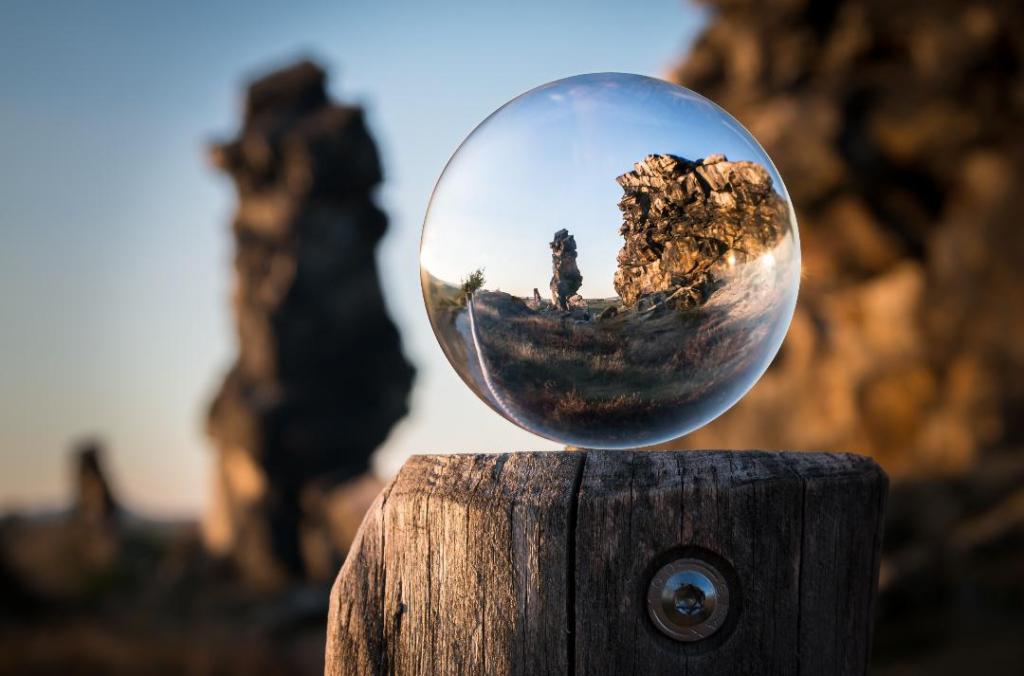
(Photo by Pixabay: https://www.pexels.com/photo/glass-ball-on-wood-clip-art-268953/)

Changing your perspective by stepping from one side to the other or getting higher or lower can often result in a clearer picture of what you’re looking at, and sometimes even make an otherwise boring photograph come alive and become a composition that transcends time and place. The same is true when it comes to looking at the many issues that face America. 

I very much appreciated a video I recently viewed by someone who has been living abroad for the past almost 15 years and was describing how their perspective of America has changed both positively and negatively. While I have never lived abroad, I have traveled and continue to travel extensively and I hold many of the same views on the specific topics this person covered … except for gun ownership, for which I am a strong proponent of our 2nd Amendment right to keep and bear arms.

The current political climate in the US is very disturbing. I do see signs of significant pushback finally occurring against the very radical ideologies on both sides of the aisle, and that is a very good thing. I also see more and more folks awaking from the slumber of bygone days and beginning to realize the potential benefits of overhauling our healthcare, food, education and transportation industries. The logistics of how to incorporate effective and truly sustainable change is the real hurdle that we as a nation must figure out if we are to survive and thrive; we have to figure out how to not throw out the baby with the bath water as we make needed changes. Our nation is physically huge and extremely diverse geographically, culturally, and socio-economically which creates significant difficulty figuring out how to fix our existing problems without destroying our economy and way of life along the way.

Getting involved at the local, county, state and federal levels in finding solutions is extremely important, and something I am doing, and I continue to look for ways to be even more effective on a larger scale. Standing on the sidelines complaining and hoping our government will magically figure things out is no longer an option.