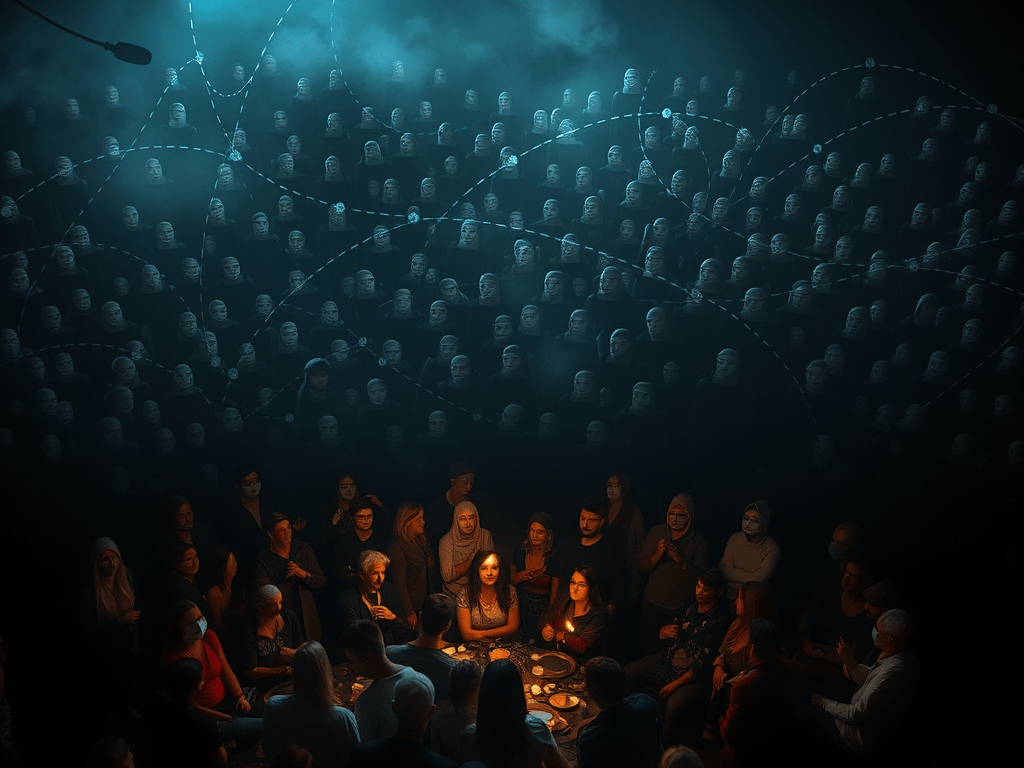
Being the Mirror: Let Truth Do the Work for You

Because integrity isn’t loud—but it lasts.

By: Rebecca Witherspoon, July 2, 2025 

There comes a point when you stop chasing or trying to offer explanations. When you realize that no matter how carefully you word things, no matter how much context you provide, and no matter how transparent you try to be—some people refuse to listen and choose to hear only what they want to hear. They’ve already decided you are guilty regardless of actual facts. Their perceived version of you is the only thing they will ever believe. No amount of clarification will change that. That’s the moment I have reached.

That’s the moment when it’s time for you put down your need to defend yourself and pick up something far more powerful—the truth. Not the loud kind of truth that rants or rages or begs to be believed. But the steady kind. The kind that stands. The kind that lets people show who they are without manipulation or fanfare. The kind that mirrors their behavior back to them, without distortion or spin.

Being the mirror means you stop engaging in circular arguments. You stop arguing with people who refuse to argue in good faith. You stop trying to fix what someone else is determined to break and destroy. Instead, you focus on clarity. On consistency. On integrity. You let your life, your words, your choices speak for themselves. Those who know you already know the truth and those who refuse to see the truth will not allow their minds to be changed. And that’s okay.

But that doesn’t mean staying silent in the face of their lies. Refusing to defend yourself is not the same as letting misinformation spread unchecked. That’s why being the mirror also means asking others to step into truth with you. It means calling for accountability—not just in tone, but in substance.

We have to stop treating feelings like they are facts. They aren’t.
We have to stop confusing “I heard” with “I know.”
We have to stop rewarding outrage that has no evidence to back it up.

If someone makes a claim, they should be willing to prove it. If they say someone’s done harm, they should be able to name exactly what was said or done and offer actual evidence—not just offer a vague sense of offense and expect everyone to follow. That’s not how healthy communities function. That’s how distrust festers.

Being the mirror also doesn’t mean being passive. It means being principled. It means inviting people to deal in reality, not rumor. And it means standing calmly—even when others are shouting—because you know who you are, and you’re no longer looking for permission to exist in truth.

You’re not performing. You’re not pleading.
You’re simply standing calm, clear, and unwilling to contort yourself to make someone else comfortable in their confusion and/or false reality.

In your calm but firm stance, some people will see themselves more clearly and some won’t. But either way, you’ll be walking in the light of your own integrity—calmly, steadily, without apology. Because truth has never needed to shout to be real. It only needs to be lived.

Empathy Without Agreement: Building Bridges That Don’t Break Us

For those who still believe in community, even when it’s hard.

By: Rebecca Witherspoon, July 1, 2025 

We’ve been told a so many lies over the years including that empathy requires agreement. That to treat someone with kindness, we must also see the world exactly as they do. That to make room for someone’s story, we have to downplay our own. But that’s not empathy. That’s erasure.

Empathy doesn’t mean endorsement. It means being able to sit across from someone, even someone who’s hurt or disappointed you, and say. “I still see your humanity.” It’s not about giving people a pass. It’s about refusing to become hardened in the ways they may have been. It’s about staying open and ready for dialogue, even when it would be easier to retreat behind justified anger.

If we’re honest, anger can feel like armor. It’s sharp, protective, and quick to justify itself. But empathy? Empathy can leave us feeling vulnerable. It requires listening without immediately rebutting. It asks us to set aside our immediate need to be right long enough to understand what’s real. Not just what’s said, but what’s underneath what’s being said.

That doesn’t mean letting go of your boundaries. In fact, boundaries are what make empathy sustainable. You can offer compassion without erasing the truth. You can listen without abandoning your values. You can love your neighbor while still naming harm when it occurs.

This is especially true in small communities, where tensions can run deep, disagreements often feel personal, and those disagreements can become public really fast. We can sometimes feel pressured to choose between staying loyal to those with whom we agree or fear being labeled disloyal for reaching out to who have disagreed with us to better understand each other. But real community isn’t based on agreement. Everything is rooted in relationship. And being in relationship asks us to stay present with one another, even when things sometimes get uncomfortable.

That kind of presence takes courage. It means choosing not to walk away just because a conversation gets hard. It means refusing to reduce people to their worst moments or loudest opinions. Showing up doesn’t mean you agree with everything someone says. It means you care enough to keep listening. And when we keep showing up with honesty and care, even strained connections can become places where something new might grow.

But presence isn’t something you owe to everyone. Some people just refuse to be open to listening or understanding. They want control. They’ll hold on to your worst moment, refuse to seek clarity or healing, and continue to stir conflict in order to keep others watching. In those cases, you can still lead with empathy—but you also need boundaries. You can step back while still holding space for grace. You can protect your peace without shutting down your heart. It’s hard to do but it is possible.

The truth is, not every conversation is worth having. Some people aren’t interested in dialogue and will use disagreement as a weapon. They’ll cling to your worst moment while completely ignoring their own behaviors. They refuse to reflect on or be accountability for their own actions. And, they seem to thrive in fanning the flames and rallying an audience. In those cases, staying present doesn’t mean staying available or handing them the microphone. Sometimes, the most loving choice is to walk away. You don’t have to keep standing on a bridge someone else is desperately trying to burn. Real connection takes two people who are willing to meet in the middle. You were never meant to hold the whole thing up on your own.

What I’ve learned—sometimes the hard way—is that empathy doesn’t make you weak. It keeps you human. It’s what prevents you from becoming the very thing you’re pushing back against.

We don’t have to agree to find common ground. We just have to stop lighting matches, stop fueling the flames, and start turning on lights to help us see one another clearly, even in the dark. Not everyone will choose that path. But some of us already have.

And that’s where healing can begin if we remain open and willing to that healing.

Forgiveness Is Not the Finish Line

For those who still believe in community, even when it’s hard.

By: Rebecca Witherspoon, June 30, 2025 

After everything that’s happened, everything that’s been said, assumed, exaggerated, and weaponized, I’ve made a choice. I’m going to walk in forgiveness. But, while forgiveness is important, it’s just the beginning. It’s not the finish line. It’s the first necessary step in a different direction.

Forgiveness, at its core, is the unilateral choice made by one person. It requires one willing heart—in this case, mine. My hope is that your heart will be willing as well. It’s not about mutual agreement or shared perspective. It doesn’t require an apology by a perceived perpetrator. It doesn’t demand accountability or even acknowledgment from the person perceived to have done the harm. Forgiveness is simply the act of letting go of bitterness so that it doesn’t take root and make a home inside of us.

But don’t confuse forgiveness with reconciliation.

Reconciliation is a whole different thing. It requires more than one person. It’s a mutual decision—built on truth, humility, and movement toward one another. And even then, it’s only possible if both parties are willing to take responsibility for their own actions, to listen without defensiveness, and to repair what has been broken. Without that shared willingness, reconciliation remains out of reach.

And then there’s trust—the most fragile and often the most misunderstood of the three. Trust is not restored simply because someone has chosen to forgive. Trust takes time. It’s not owed. It’s earned, brick by brick, through consistency, accountability, and truth. And when it’s been broken, especially deliberately, it can’t be rebuilt with shortcuts or spin. 

So, yes, I forgive. Not because I’ve forgotten what’s been done or because it no longer matters, but because I refuse to carry the burden of the anger, pain, and bitterness anymore. I refuse to let the actions of others calcify in me as resentment. I forgive because I want to live with an open heart and a clear conscience. But I also will maintain boundaries to protect myself from further harm.

Forgiveness does not require silence.
It does not mean enabling harm.
And it does not make me naive.

I know that for some, any gesture of grace will be read as weakness. Some will continue to act in ways that harm, distort, or divide—no matter what olive branches are extended. But I’m not extending these words for them. I’m writing for the people who want to find a way forward. The ones who are tired of walking in suspicion. The ones who are willing to stop assigning motives and start listening again.

This community is worth that effort. But we can’t get there on forgiveness alone. It takes mutual courage. It takes accountability. While I can heal on my own, in order for a community to heal it takes more than one voice willing to say, “I see what’s been broken—and I want to help rebuild.”

So, no—I’m not pretending we’re all okay.

But I am choosing to live like healing is still possible.

If you are too, then maybe—just maybe—we can take the next step together.

After the Moment of Grace: Now What?

A series about what comes after the moment of grace.

By: Rebecca Witherspoon, June 29, 2025

There are moments in life when all the noise fades. When someone’s loss, or pain, or humanity breaks through all the posturing and reminds us that before anything else—we are people. Not parties. Not platforms. Just people.

I recently experienced one of those moments after the death of my father. And in that moment, something surprising happened. Someone who has publicly disagreed with me, showed up. They didn’t come with conditions or corrections. They came with kindness. For a brief window of time, the walls lowered, the labels faded, and what remained was the simple truth that we are all human, and we all hurt.

That was the moment of grace.

But then, inevitably, the moment passes. Life speeds back up. People can retreat back to their corners. Old patterns will try to reclaim their place. And the question becomes: Now what?

What do we do after that single moment of grace?

Because if that’s all it ever is—a fleeting moment—it’s just not enough. Grace is a door, not a destination. It is meant to be opened. It invites something. But if we don’t walk through that door, if we don’t let it change how we engage, then it becomes little more than a lovely pause in a much uglier rhythm.

This post is the first in a series that’s not about being right louder, or calling people out just to score points. It’s about something harder and much more hopeful—what it means to start walking differently. To lead, even when no one’s following. To tell the truth without spitting fire. To stop pretending silence is peace, and also resist the pull to respond to cruelty with more cruelty.

It’s about choosing, every single day, not to become what we’re fighting against. It’s not easy but ultimately it’s worth it.

So if you’re tired—of the noise, of the performance, of the bitterness that’s dressed up like bravery—you’re not alone. This series is for anyone who’s ever wondered if healing a community is still possible. I believe it is. But it starts with small steps, hard truths, and a deep, abiding commitment to grace—not as a weakness, but as a radical act of strength.

Let’s walk it out together.

Ripples of Change Begin Here

By: Rebecca Witherspoon, June 28, 2025

Reflecting back over the past year—and especially the past seven months or so—I recognize that I, too, have contributed my own part in the heated rhetoric that has circulated in our community. In my opinion, we’ve all gone too far, and someone needs to step up and be the pebble in the pond.

First, I want to apologize to anyone I may have unintentionally offended. While it may not have been my intention to cause offense, that doesn’t negate the impact. You deserve both my apology and my sincere commitment that I will try to do better moving forward. I can’t promise perfection, but I will do my best.

Second, today I am choosing to forgive—both myself and others—for engaging in the negative rhetoric. Today, I am choosing a different path. I will continue to faithfully fulfill the responsibilities I was elected to carry out , continue to express my opinions, and continue to defend my reputation with truth when others attempt to destroy it with falsehoods—just as I have always done. But, I am choosing not to react to others. I will do my best to let go of the reactionary emotions I may have displayed in the past and move forward with a clearer, calmer intention. Again, I can’t promise perfection, but I will do my best.

Third, while I understand that some may believe I should denounce others for behaviors they find offensive—simply because those individuals are my friends—that is not something I’m willing to do. Every person is responsible for their own words and actions. It is not my moral, ethical, or personal obligation or responsibility to answer for the behavior of others. If you believe someone has legitimately caused you harm, I encourage you to take it up directly with that person—not with me.

I choose to be the pebble in the pond. Others will have to make their own choices.

A Moment of Grace: Can Shared Loss Build Bridges Where Conflict Once Stood?

By: Rebecca Witherspoon, June 27, 2025

There’s a strange, beautiful thing that can happen in the wake of loss. When someone close to us passes away, especially a parent, the world momentarily shifts. The sharp edges of conflict soften. The lines that divide us seem less important, even arbitrary. Grief, it turns out, is a universal language—and when it speaks, even the most unlikely people sometimes pause long enough to truly listen.

Just shy of his 95th birthday, my dad passed away. While I wasn’t able to be with him in his final moments, I, along with my many siblings, had the extraordinary gift of being with him just a week prior to celebrate what would be our final Father’s Day together. We knew it was likely goodbye, and yet, that weekend was filled with poignant joy. There was laughter, shared stories, hand-holding, and love. My daddy’s eyes sparkled. His heart was full. And so was mine. There would be time for tears later. This moment was about bringing joy to the man who helped bring me into this world.

In the days following his passing, I was overwhelmed by the outpouring of condolences and expressions of support. Every message, every gesture, touched me deeply. But one message in particular stood out—not because of what was said, but because of who said it.

It came from someone who, for many years, has publicly opposed me. Our political differences have made us adversaries in the most public of ways. She has not hidden her disapproval of me. And yet, when she learned of my father’s death, she reached out with genuine compassion and sympathy. She, too, had lost a parent recently. And in that moment of mutual understanding, she put aside our differences to offer something truly human: kindness.

I was stunned. Grateful. Humbled. And I wondered: Can this kind of moment—this single, fragile act of grace—be a catalyst for something more?

Her action reminded me of a dear friend who lives here in my village, one of the kindest and wisest souls I know. In response to recent local political tensions and acts of unkindness that have left many of us feeling bruised and wary, she created a private Facebook group devoted entirely to kindness. Its purpose? Simple, yet profound: to encourage neighbors to reach out with compassion and warmth, even to those with whom we disagree. She believes, as I do, that communities heal when people are willing to look past our perceived differences and make the choice to see each other not as caricatures or enemies, but as human beings carrying their own burdens.

Her initiative, and the unexpected condolence I received, both reminded me of just how powerful one moment of humanity can be.

It would be naïve to think that a single kind gesture erases years of conflict. It doesn’t. But it does make space for possibilities and hope. Space for reflection. Space for dialogue. Space, perhaps, for the first seed of reconciliation.

The truth is, we don’t have to agree with one another to treat each other with dignity. We don’t have to become friends to show empathy. But we do have to start somewhere. And shared human experiences—grief, love, joy, loss—might just be that starting point.

So today, I want to thank two women: one, a trusted friend and guide in my life, whose commitment to kindness inspires me daily. The other, someone I’ve long seen as a political opponent, who in a single heartfelt moment reminded me of the goodness that still lives in all of us.

If you’re reading this, I invite you to think about someone in your life with whom you’ve had deep disagreement. What would it mean to reach out—not to fix everything, not to erase the past, but simply to acknowledge our shared humanity?

Kindness doesn’t solve every problem. But it does open a door. And sometimes, opening a door is the most powerful thing we can do.

The Mirror They Can’t Stand

When you reflect truth, some people only see what they hate.

By: Rebecca Witherspoon, June 26, 2025

I’ve noticed something that keeps happening over and over, and if I’m being perfectly honest, I’m done pretending to be surprised by it.

Every single time I write anything with even a hint of compassion or a call for unity—every time I try to have a conversation that isn’t about fighting or scoring points—there is a certain group of people who cannot help but jump in, not just to disagree, but to attack. Not with ideas. With venom. Every. Single. Time.

It doesn’t matter how carefully I say something. It doesn’t matter how balanced or thoughtful or fair I try to be. It doesn’t matter if I literally write a post calling for kindness, or understanding, or just basic human decency. For that same group of people, that’s a threat. And the minute I don’t fall in line with whatever script they’ve written in their heads, they can’t help themselves—they show exactly who they are. Every. Single. Time.

At first, I used to second-guess myself. I’d wonder if I’d missed something, if I could’ve worded something better, or if I could have tried harder to avoid conflict. But now I see it for what it is. It’s not that I’ve said something particularly offensive—it’s that I’ve said something they can’t control.

They don’t want conversation. They want conformity and obedience. They want people who nod along, never push back, never question, never challenge. And if I don’t play along, they go straight for my jugular with character assassination regardless of actual truth or evidence. I am like a mirror that must be destroyed because it reveals they have become the very thing they hate most.

Here’s what I’ve learned, especially over these past six months, if you give people enough space and enough rope, they’ll show you exactly who they are. And when they do? Believe them.

I don’t have to call anyone out by name. They reveal themselves to the world without any help from me, loud and clear. I write something that comes from the heart—and right on cue they respond by lashing out, twisting my words, painting me as the enemy. Over a message of unity. Think about that.

If you’re genuinely the kind of person who wants to build a better world, you don’t flip out when someone says, “Let’s try to find common ground.” You don’t lose your mind when someone says, “Maybe we can agree to disagree without being enemies or trying to destroy each other.” But when people are committed to outrage, when they’re addicted to hate and the feeling of being morally superior, unity feels like a loss of power. It threatens their entire identity. And that scares the shit out of them.

So they reveal themselves. Every. Single. Time.

And while it used to hurt—hell, some days it still does—I’ve stopped taking it personally. Because I’ve come to realize it really isn’t about me. I’m just the mirror they don’t want to look into. And when people are determined to live in bad faith, when they refuse to see any other viewpoint but their own, there’s nothing I or anyone else can say that will satisfy them. Their problem isn’t my words—it’s my audacity to speak at all.

So I’ll keep speaking.

I’m not here to placate people who’ve made it their mission to misunderstand me and paint everything I say or do with some evil ulterior motive. I’m not here to be small so they can feel big. I’m not here to be their doormat or punching bag so they can feel better about themselves. And I’m certainly not here to stay silent when their abusive behaviors cause harm and division. I’ll keep showing up. I’ll keep saying what I believe, even if it makes some people uncomfortable or even angry.

And I’ll keep letting them show me who they really are. I don’t need to guess anymore. They’re telling me. Loudly. Every. Single. Time.

Let them.

Because clarity is a gift—and they keep giving it to me, whether they realize it or not.

Free Speech Cuts Both Ways: Why I Block, Mute, and Call Out Bullshit

By: Rebecca Witherspoon, June 24, 2025

When people engage with me in an honest, civil manner, I always try to respond in kind. I welcome respectful discourse and differing opinions. Sometimes I’m swayed, sometimes I sway others, and sometimes we just agree to disagree. But when comments on social media come from obvious troll accounts or from individuals whose sole intent is to provoke, demean, or personally attack, I choose to either not engage at all or to disengage as soon as I realize what’s going on. If an account is obviously fake, I will delete the comment and block the account—because I refuse to waste time or energy feeding that kind of behavior. If an individual becomes consistently abusive in their comments, I block them. If they wish to speak with me in a public setting and in a civil manner, they know how to reach me.

There have been times I’ve disabled comments entirely (especially on platforms like Nextdoor) when I anticipate an onslaught of personal attacks. Ironically, that often results in even more outrage with some running to other social media platforms (like Reddit) with accusations that I’m trying to “silence” or “censor” people or avoid accountability—none of which is true. So then I reopen the comments, and—right on cue—the vitriol begins. In these types of cases, I just let my original words speak for themselves and I choose not to respond or react. Sadly, the same circle of people who cry about being censored or attacked dive right in with their false and defamatory accusations, baseless conspiracy theories, and malicious character assassinations that bear no resemblance to actual truth. 

In some cases, perfectly ordinary behavior gets twisted by these same people into something sinister. I’ve been falsely accused—without evidence—of everything from creating fake accounts to attack and intimidate people, to engaging in harassing and unethical behaviors, and even alluding to illegal activity. Those are serious allegations with real life implications IF they were actually true. And to make those types of false and defamatory allegations also carries serious real life implications. But when I defend myself, you would think the sky had fallen. I’m told that I somehow lost the right to defend myself simply because I’m a “public figure” and that I should just accept and expect being falsely, maliciously, and personally attacked and defamed. That’s not how it works.

What’s even more hypocritical is that while some of these attacks come from people using their real names, many of these attacks come from anonymous or fake accounts. Their excuse? They want to “protect themselves.” So, it’s apparently acceptable to hide behind a fake profile to publicly falsely malign me, but unacceptable for me to defend myself openly? That double standard is as absurd as it is cowardly.

Then there’s the demand that I publicly denounce friends or colleagues because someone else finds their actions offensive. I won’t play that game. If you have an issue with someone, take it up with them directly. I’m not your spokesperson, your moral referee, or your middleman. I don’t control other people, and I’m not going to pretend I do to appease you or an angry mob. You saying I’m “guilty” simply because I associate with someone, doesn’t actually make me “guilty.”

If you sincerely believe I’ve done something wrong—ethically or legally—then bring the actual proof. Not rumors. Not assumptions. Not feelings dressed up as facts. Just because you don’t like my position on an issue, or who I associate with, doesn’t mean I’ve done anything wrong or committed misconduct. I have the same rights as you do—including the right to free speech, to self-defense, to call out bullies, to associate with whomever I please, to have communications with whomever I choose, and to draw boundaries when I’m under attack.

Let me be clear, I do not create fake accounts. I speak for myself, publicly and transparently. I also do not dox people—never have and never will. Referencing that someone “lives around the corner from me” is not doxing. Doxing is the illegal sharing of private, personally identifying information without someone’s consent for the purpose of harassment or harm. I reject that behavior entirely, and accusing me of it without evidence is both false and defamatory.

Finally, if you act in a way that I perceive as unhinged, toxic, harassing, or abusive, or if you spread what I believe to be false and defamatory accusations against me or anyone else, I will say so. Loudly and publicly. I won’t sit quietly while bullshit gets flung around unchecked. And yes, I absolutely reserve the right to take any and all steps I deem necessary to hold people legally accountable if they cross the line into what I believe is illegal conduct or blatant violations of professional ethics—especially when it affects me or my family.

I’ve been called every name in the book: racist, bigot, extremist, hateful, turd, bitch, trash, Nazi, transphobe—you name it. Not once have any of these insults come with actual proof. These insults aren’t about truth—they’re about control. They’re a tactic, plain and simple, used to shut down opposing views and smear the reputation of anyone who dares to challenge a preferred narrative. That’s not holding someone accountable—that’s straight-up projection.

Here’s some clear delineation between accountability and projection:

— Accountability is holding someone responsible for their actions, decisions, or words based on verifiable facts (not assumptions), evidence, and a desire for integrity or justice.

— Projection is a psychological defense mechanism where someone attributes their own feelings, flaws, or behaviors onto someone else. It lacks evidence and is based on emotions, fears, and assumptions.

And just to be clear, I am not a “victim.” I know what being a victim is and I survived being a victim many years ago and came out the other side stronger and smarter. I know how to take care of myself and protect my own. I will never be a “victim” again. But if someone comes after me or the people I care about, I will call it out and, if appropriate, I will hold them accountable. That’s not playing the victim—that’s calling out abuse and unacceptable behavior. If that makes you uncomfortable, here’s a real simple fix—don’t be the asshole I end up calling out.

In conclusion:

I will always value open, honest, and respectful dialogue. If you come to me in good faith, I’ll meet you there every time. But I’m not obligated to entertain trolls, engage with fake accounts, or absorb abuse masquerading as critique. I’m not here to be your emotional punching bag, your scapegoat, or your projection screen. I know the difference between a disagreement and a smear campaign—and I’m no longer giving my time or energy to people who don’t. I have every right to block, mute, delete, and disengage from anyone who crosses the line into personal attacks, defamation, or harassment. And I have every right to speak up, fight back, and defend myself and those I care about—publicly and unapologetically.

So no, I won’t be bullied into silence, forced into performative outrage, or guilt-tripped into defending myself in a rigged game where the rules change every time I speak. Free speech isn’t a one-way street, and it doesn’t end where your feelings begin. If you don’t want to be called out, here’s your warning: don’t lie, don’t harass, don’t defame, and don’t act like an unhinged asshole. Because if you do—I’ll respond in the way I see fit. You don’t have to like it, but you should just expect it.

Unapologetically Independent: A Voice That Won’t Be Silenced

Why I Stand Where I Stand—and Why That Doesn’t Make Me Your Enemy

By: Rebecca Witherspoon, June 22, 2025


Most people would be wrong to assume they know me or my political beliefs. Some, unwilling to engage in meaningful dialogue, have labeled me a fascist, racist, right-wing extremist, anti-LGBT, transphobic, and worse. Not one of these pejorative labels is even remotely accurate.

I reject political extremes and refuse to be intimidated into silence by people who think destroying others over political disagreement is acceptable. When I identify the cowards hiding behind fake accounts (and some I already have identified) spreading lies and innuendo about me or others, I will call them out—gleefully and publicly.

I have many friends who lean left politically. We may not agree on everything, but we deeply respect one another’s viewpoints. One of my dearest friends is a staunch Democrat, and while we often disagree on policies, we have thoughtful conversations, we challenge each other respectfully, and we love each other dearly. The same goes for my daughter—a self-described socialist. We frequently engage in spirited discussions. Sometimes she sways me, sometimes I sway her, and sometimes we just agree to disagree. And when we know a topic will cause unnecessary friction, we simply choose not to “go there.” That’s how it should be—between individuals and as a society.

Here’s how I define myself politically:

  • Fiscally, I am very conservative. This does not mean far-right. I advocate for limited government spending, low taxes, balanced budgets, and reducing national debt as key to a healthy and sustainable economy.
  • Socially, I am very classically liberal. This does not mean leftist. I champion individual liberty, limited government, free markets, and protecting the most vulnerable members of our society as the cornerstones of a just and free society.
  • I am a strict Constitutionalist. The U.S. Constitution is not a “living document.” It should be interpreted exactly as it was originally written and intended, without inferring modern meanings, judicial overreach, or expanding government powers beyond the text.

I grew up a Democrat, but often say that Jimmy Carter cured me. For most of my adult life, I’ve been an independent. I’ve voted across party lines, and I always research a candidate’s record to avoid voting for flip-floppers or people who show tendencies towards the extremes. I’m not a dyed-in-the-wool Republican and have never claimed to be—though, at present, the Republican platform aligns more closely with my values than the Democratic one.

The best comparison for my political beliefs would be a hybrid of Ross Perot and Ron Paul—with more alignment toward Perot’s platform (Paul is a bit too isolationist for me). My beliefs include:

  • I support some taxpayer-funded social programs to ensure our most vulnerable citizens have access to basic necessities. But I also believe individuals should take personal responsibility for improving their own situations.
  • I believe in common-sense regulations that protect people from corporate abuse, fraud, or dangerous monopolies.
  • I believe those who work hard should keep the majority of what they earn. Government should be funded responsibly, focusing on essential services and infrastructure—not bloated bureaucracy or overreach.
  • I believe all human life is precious and worth protecting.
  • I support bodily autonomy—no government should mandate medical treatments or force individuals to ingest or inject anything without fully informed, voluntary consent.
  • I believe in equal opportunity for all citizens—but outcomes should be earned, not engineered by government intervention.
  • I am not an isolationist, but I oppose wars that don’t serve our national interest. I believe in peace through strength and defending our country when truly necessary.
  • I passionately oppose all forms of discrimination and have no tolerance for those who disguise racist and discriminatory policies under the banner of anti-racism and anti-discrimination.
  • I believe children deserve to be protected from ideologies or procedures that harm their natural development. Chopping off healthy body parts of minors under the guise of “gender affirmation” is not healthcare—it is child abuse, medical malpractice, and a crime against humanity. Children deserve space and time to discover who they are without interference. If, as adults, they still choose to pursue medical transition, that should be their decision—but never at taxpayer expense.
  • I firmly oppose any sexualization of children. If you support such grooming behavior, you are the problem. If you work in education and engage in this, you should be fired, potentially prosecuted, and barred from working with children.
  • “Minor-attracted persons” are pedophiles and should be kept away from children—period.
  • Public education must be free of personal, religious, and political ideologies. Parental rights take precedence over school or government agendas. Parents have the right to know everything about their child’s education, and nothing should be hidden from them—ever.
  • I believe in law and order. Those who commit crimes should be held accountable. Any public official who purposely makes it difficult to or opposes our law enforcement from enforcing the law and advocates for criminals and illegal aliens over the safety and wellbeing of American citizens should either be removed from office or voted out at the next election—and anyone who votes for these public officials should be ashamed of themselves.
  • I believe anyone who comes to our country should do so legally. If someone crosses our border illegally, they’ve already broken our laws and must face consequences. That said, our immigration system needs reform—a legal, fair, and streamlined process must exist for those who want to contribute and assimilate. If you refuse to assimilate, perhaps this is not the place for you.
  • I believe civil discourse should remain civil. Challenge ideas, not people. And I have no respect for politicians who talk sweetly while pushing policies that erode our freedoms and destroy social cohesion. I’d rather support someone who speaks plainly—even harshly—if their policies restore liberty, safety, and unity.

I could go on, but I’ll stop here.

You don’t have to agree with me. Many of my friends don’t. But in this country, we still have the right to believe what we believe, to speak our minds, and not be silenced, slandered, or destroyed because of it.

That’s what it means to live in a truly free society. And I won’t stop standing up for that.

Toxic Threads: How r/Wisconsin Became a Hub for Anonymous Hate

As digital mobs grow bolder, civic life grows more dangerous—a chilling look at how digital mobs are dismantling real-world democracy.

By: Rebecca Witherspoon | June 21, 2025

Once upon a time, Reddit’s r/Wisconsin was a place for curious minds and community engagement. It was a digital gathering spot for people across the state—left, right, and center—to talk Packers, compare supper clubs, share fall color routes, vent about potholes, and exchange ideas on everything from politics to pop culture. It wasn’t perfect, but it felt like a corner of the internet where Wisconsinites could be, well, neighborly.

But something has shifted.

In recent years, r/Wisconsin has devolved into a cesspool of anonymous vitriol, where the loudest voices aren’t the most thoughtful—they’re the most vicious. What was once a forum for civic discussion and shared interests has been weaponized by users who hide behind screen names to smear, harass, and attempt to destroy the personal reputations of people they disagree with—especially those involved in local government or public service.

Let’s be clear: dissent is not the problem. Debate is healthy. Democracy requires disagreement. But what’s happening now isn’t about disagreement at all. It’s not about making a better case or offering a clearer solution. It’s about defamation, digital vigilantism, and character assassination.

People post entire threads dedicated to tearing apart local elected officials, school board members, or community leaders. Not just criticizing their decisions—but implying criminal behavior, mocking their appearance, spreading rumors about their families, and labeling them with slurs or political dog whistles. None of this is based on evidence. Much of it is false. All of it is cruel.

What makes this even more troubling is the imbalance of power: the accused are named, the accusers are not. A school board member or village trustee might see their name trending on Reddit because a few anonymous users don’t like how they voted on a curriculum change, or, God forbid, the removal of a toxic chemical from public water. Suddenly, they’re being accused of corruption, incompetence, or worse. Their photo gets posted. Personal information gets hinted at. The line between online hate and real-world danger begins to blur.

And for what? A dopamine hit? A momentary feeling of self-righteousness? The illusion of power?

Even if you don’t like the people being targeted, we should all be concerned about the precedent this sets. If we normalize anonymous mobs targeting individuals with zero accountability or factual grounding, what’s to stop them from turning on you—or anyone else next?

This isn’t theoretical—the threat is real, and it’s already turning deadly. In 2024, a judge and her husband were murdered in their home by someone harboring a grudge over a custody ruling. Just months earlier, a Minnesota state representative and her spouse were seriously wounded in a targeted shooting at their home. Just a short time ago in 2025, two Minnesota state lawmakers were targeted, one being killed alongside her husband, and the other seriously wounded alongside their wife. These weren’t random crimes—they were politically or personally motivated attacks, driven by resentment and rage. When digital threats go unchecked, they don’t always stay online. They can—and do—spill into the real world with devastating consequences.

Closer to home, civic-minded people—those who once viewed public service as a duty and an honor—are now installing security cameras, reinforcing doors, and changing daily routines. Not because they’re paranoid, but because the online harassment has crossed the line into something darker and more dangerous. Anonymous smear campaigns on Reddit and other social media platforms have made them fear for their safety and that of their families. Some are quietly stepping back. Others are still serving, but under a cloud of anxiety. Homes that once felt safe now feel exposed. This is the chilling new reality: it’s not just reputations being destroyed—it’s peace of mind, and potentially, lives.

None of these public servants signed up to be doxxed or smeared on Reddit (and other social media platforms like TikTok, Nextdoor, and Facebook) by someone using a throwaway account like “Careless_Ad_3255,” “Skorpion_Snugs,” “piggie210,” “@piggene,” “Automatic_Dust_1056,” “Stickybeebae_,” “Abee Honey,” “Glinda GoodWitch,”  “Patient Smith,” and “Truth of the Village” (that one is particularly interesting considering the many false and defamatory accusations it spreads under the guise of sharing “truth”). The fake names referenced here are local to me. Each has a long and troubling history of doxxing and malicious defamatory smear campaigns against people with whom they have a disagreement. Most of the people behind these accounts have been identified. Holding them accountable for their actions, however, is not always easy.

We can’t talk about this without addressing the role of Reddit’s (and other social media platforms) moderators—many of whom are anonymous themselves and appear to have little interest to rein in the toxicity. Threads full of hate remain up for days, weeks, and months or are selectively moderated depending on the target. Reasonable pushback gets downvoted into invisibility. It’s not a marketplace of ideas anymore. It’s a pile-on. In fact, when those who have been the subject of the vicious smear campaigns report the concerning behaviors, the victims are deplatformed instead of the perpetrators.

So, what can be done?

First, users of r/Wisconsin—and Reddit and other social media platforms more broadly—need to wake up to what they’re participating in. Are you helping build community, or are you feeding the fire? Are you holding public figures accountable, or just joining a mob?

Second, Reddit and other social media platforms have a responsibility to enforce their own rules. Harassment, doxxing, and misinformation are all against most platform’s site-wide policies. But enforcement is often weak, delayed, or non-existent. If platforms don’t take moderation seriously, the loudest trolls win by default.

And finally, we as citizens need to rethink how we engage with public discourse. Disagree passionately, yes. Challenge ideas, yes. Demand transparency, yes. But if we lose our ability to separate fact from fiction and disagreement from destruction, we won’t just erode our public square—we’ll burn it down.

There’s nothing courageous about destroying someone’s life from behind a keyboard. There’s nothing virtuous about twisting facts to score anonymous points. And there’s nothing “Wisconsin nice” about a digital mob with pitchforks.

We deserve better. And it starts with choosing a better way to engage—one rooted in truth, integrity, and the simple understanding that behind every anonymous username is a human being. But it doesn’t end there. Silence enables cruelty. So, if you see it—call it out. If you know who’s behind it—hold them accountable. If you’re part of a community being targeted—don’t retreat. Organize, document, and speak up.

Free speech is a cornerstone of American democracy, but so is responsibility. The health of our public square depends not just on the right to speak, but on the courage to speak with honor—and the willingness to stand up when others abuse that right to harm and intimidate.

This isn’t just about Reddit or any other specific social media platform. It’s about the kind of community we want to build, both online and off. Do we want a culture where fear drives good people into hiding? Or one where decency, accountability, and mutual respect push hatred back into the shadows?

The answer is up to us. Because the future of our civic life will not be shaped by the loudest voices—it will be shaped by the bravest ones. Let’s be brave. Let’s be better. And let’s start now.